7 Great Mystery Games for Every Kind of Detective

Why do lists of great mystery games assume you've got an entire weekend, a fresh notebook, and unlimited patience for dialogue? Sometimes you want a proper investigation. Sometimes dinner's nearly ready and you just want to catch someone lying.
The best mystery game for tonight is the one that fits your available attention, not necessarily the one with the biggest story. A clever browser case can scratch the detective itch without becoming homework, while a longer adventure gives you room to get attached to its suspects.
These seven picks suit different situations, from a spare moment before dinner to a cooperative evening or a rainy weekend. You'll find the practical differences upfront: how much reading and clicking to expect, what kind of challenge you're signing up for, and whether you can start free or need to buy in. Pick the situation that sounds like yours and leave the rest for another night.
Table of Contents
- 1. Mystery Hunch
- 2. Midnight Casebook
- 3. Daily Detective
- 4. NOIR
- 5. Half Evidence
- 6. Duck Detective The Secret Salami
- 7. The Case of the Golden Idol
- All 7 great mystery games at a glance
- Pick Your Next Case and Start Detecting
1. Mystery Hunch
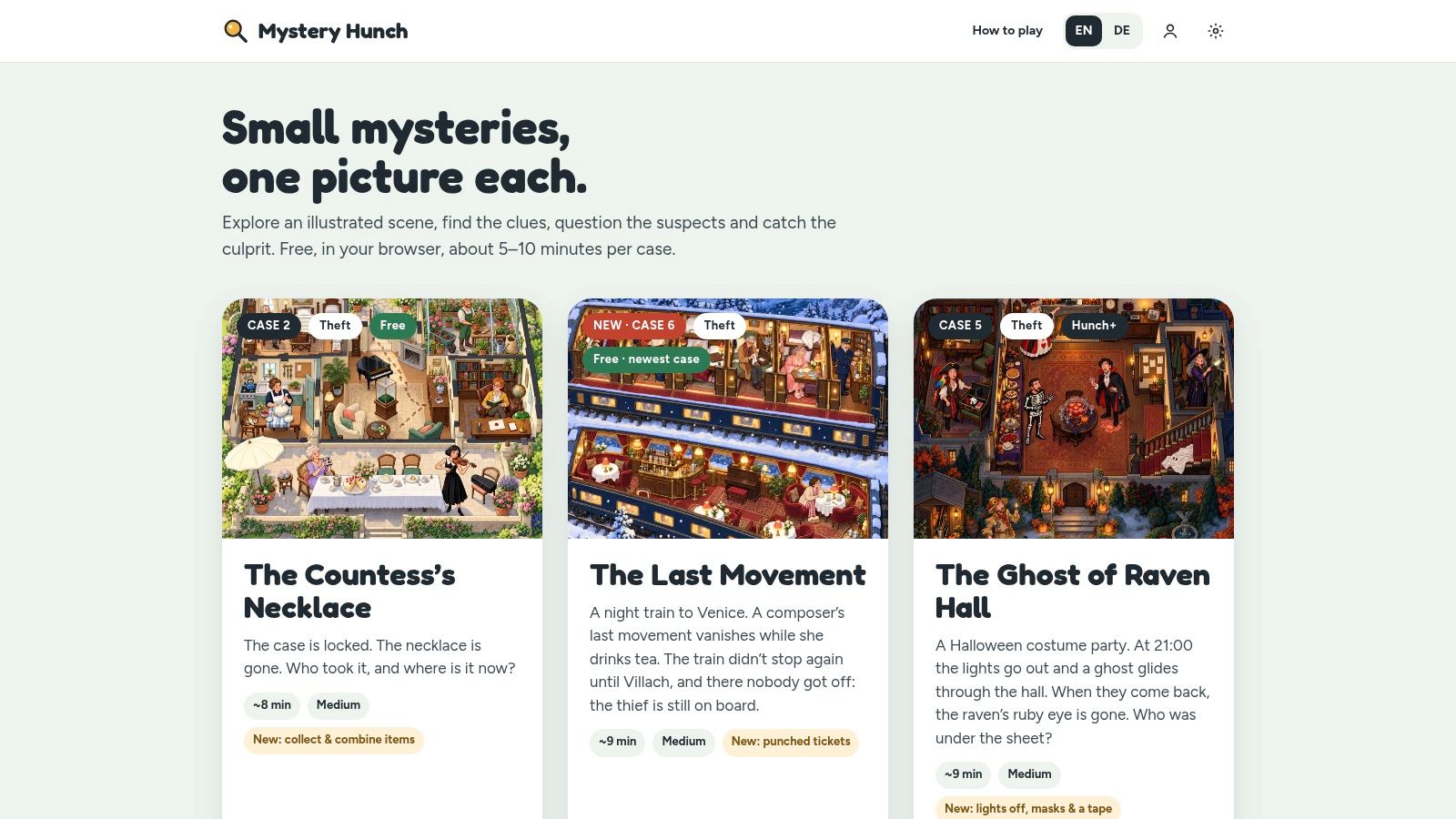
Best for a complete investigation before dinner. Mystery Hunch puts an illustrated scene in front of you and asks you to do more than spot an out-of-place object. You tap rooms and objects, collect clues, combine evidence in your notebook, and compare what you've found with suspects' statements before accusing someone with proof.
Our cases take about five to ten minutes, with easy and medium difficulty labels to help you choose. Start with Grandma Hilde's Recipe Book for an approachable theft investigation, or choose The Hut on the Grauhorn if a snowed-in murder sounds more appealing. The important distinction is that you're finishing an individual case, not stopping halfway through a sprawling adventure.
What You're Trading Off
- Hands-on deduction: The notebook gives you somewhere to connect evidence rather than keep every detail in your head.
- Optional help: Your partner can offer a hint, but each hint costs one star from the three-star score.
- Flexible presentation: Bright and noir visual styles, English and German options, and phone-friendly layouts let you choose how to play.
- No purchase barrier: Our early prototype is free to play in the browser.
The limitation is scope. This is a new project made by one person, not a deep archive you can disappear into for a weekend, and cases, features, and scoring may change as development continues.
Best approach: Examine the scene before asking for a hint. Then use the notebook to test a theory, not simply to inventory everything you've clicked.
Choose this when you want a compact mix of visual searching, evidence handling, and whodunit reasoning. Skip it tonight if what you really want is extensive dialogue or a long character-driven story.
2. Midnight Casebook
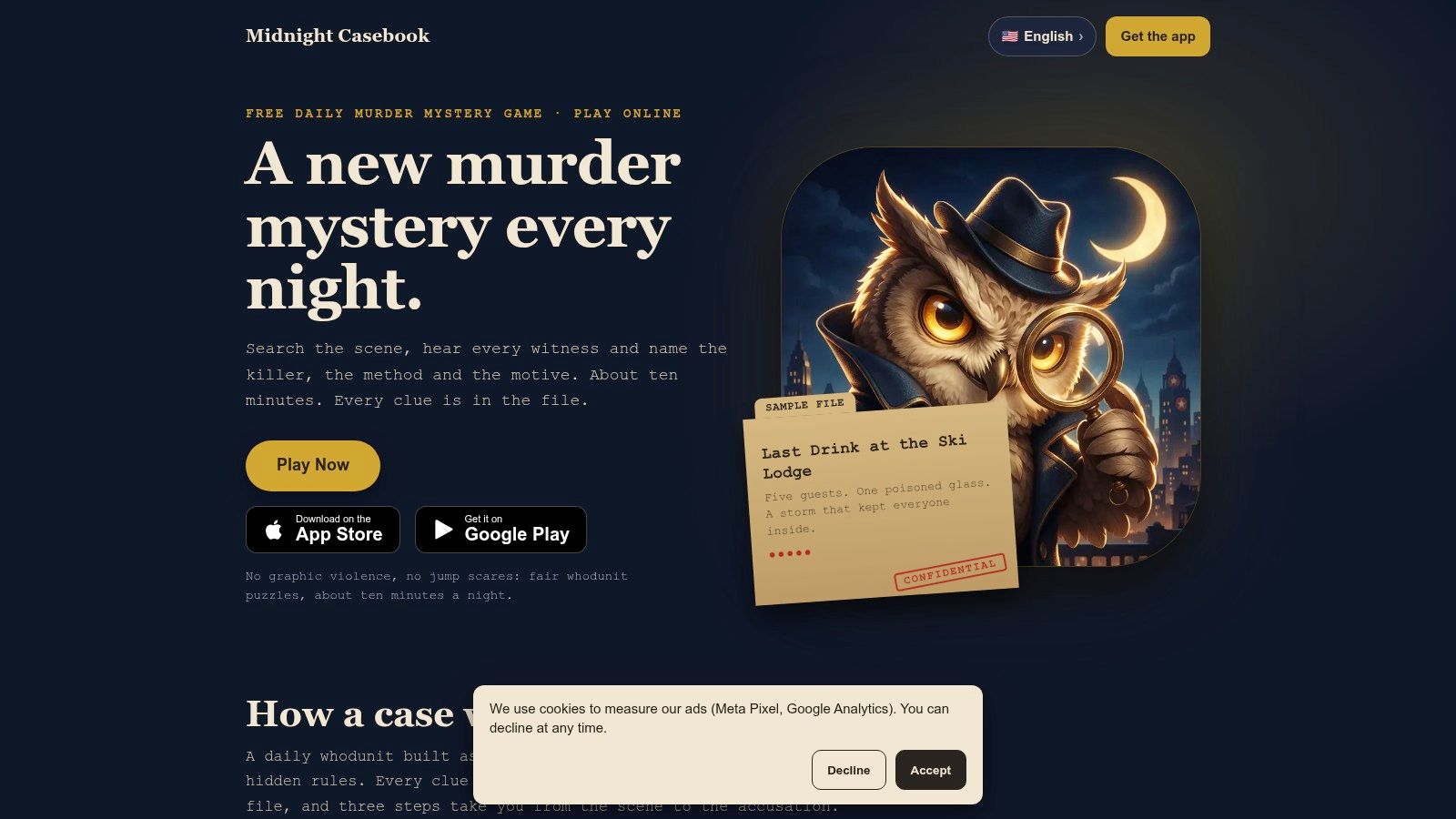
Your ideal daily ritual might be less about maintaining a streak and more about having a fresh crime to discuss. Midnight Casebook suits that mood: inspect an illustrated crime scene, hear witness statements, and work toward an accusation that explains the killer, method, and motive.
The cases take about ten minutes, according to Midnight Casebook. That makes it a good choice for a deliberate break rather than something you hurriedly squeeze into the last moment before leaving home.
Choose It for the Full Whodunit Shape
Having to identify a method and motive matters. You can suspect the right person for the wrong reason, so the useful question isn't merely who looks guilty, but whether your explanation accounts for the evidence and testimony.
- Reading versus clicking: Expect scene inspection alongside witness accounts and timeline reasoning.
- Cost: Free cases let you try the format; the archive, all hints, and longer Sunday Dossier sit behind Casebook Pro.
- Main drawback: The daily schedule determines what's fresh, so it's less convenient when you want to browse freely through older investigations.
For a separate scene-based challenge, bookmark The Hut on the Grauhorn rather than interrupting your current investigation to start another.
Pick Midnight Casebook if you enjoy explaining a crime from several angles. Pass if daily availability irritates you or you want unrestricted access to a large back catalogue without paying.
3. Daily Detective
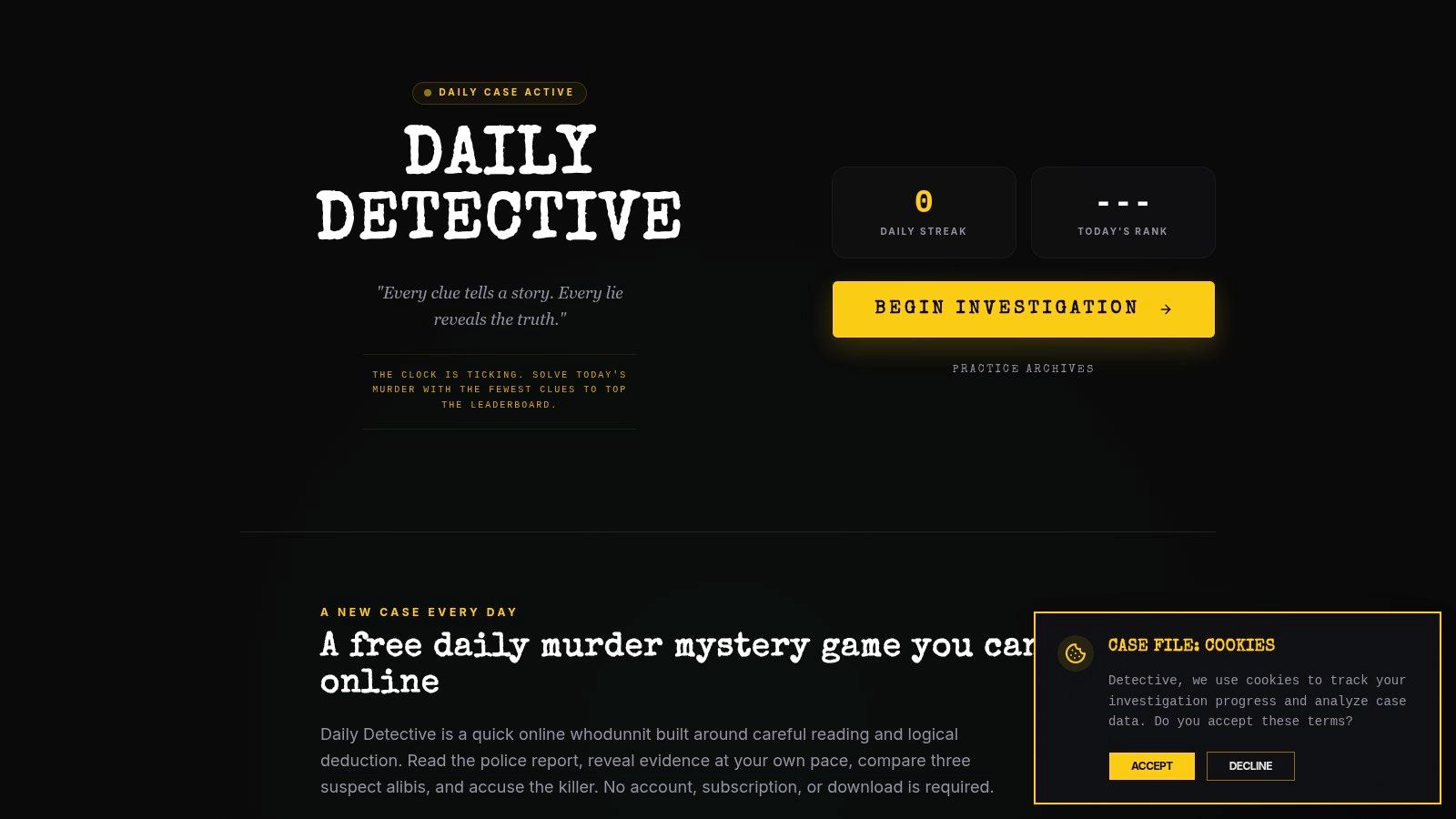
Daily Detective is the reading-first choice. You examine a police report, reveal evidence, compare suspect alibis, and decide whose account doesn't survive scrutiny. There's less emphasis on exploring a picture and more on noticing what a sentence implies.
Daily Detective describes cases as taking around five minutes, with no signup, subscription, or download required. Choose it when you want the mental pleasure of a whodunit without navigating rooms or learning an elaborate interface.
Read the alibis as claims to test, not as background flavour. A convincing story still has to agree with the evidence.
Small Format, Focused Attention
The clue-reveal system gives you a useful decision: commit to your interpretation or uncover more information first. After accusing someone, read the explanation even when you're right, because a correct guess and a supported deduction aren't the same thing.
Its strength is also its limitation. The daily rotation is brief, and this isn't the place for leisurely scene exploration, elaborate conversations, or a sustained narrative evening.
If your next mood calls for a theft rather than another murder, save The Countess's Necklace for a separate session.
Choose Daily Detective when you're happy to read carefully and finish quickly. Don't choose it merely because it looks lightweight: a short text puzzle still asks you to hold statements in mind and distinguish a genuine contradiction from an incidental detail.
4. NOIR
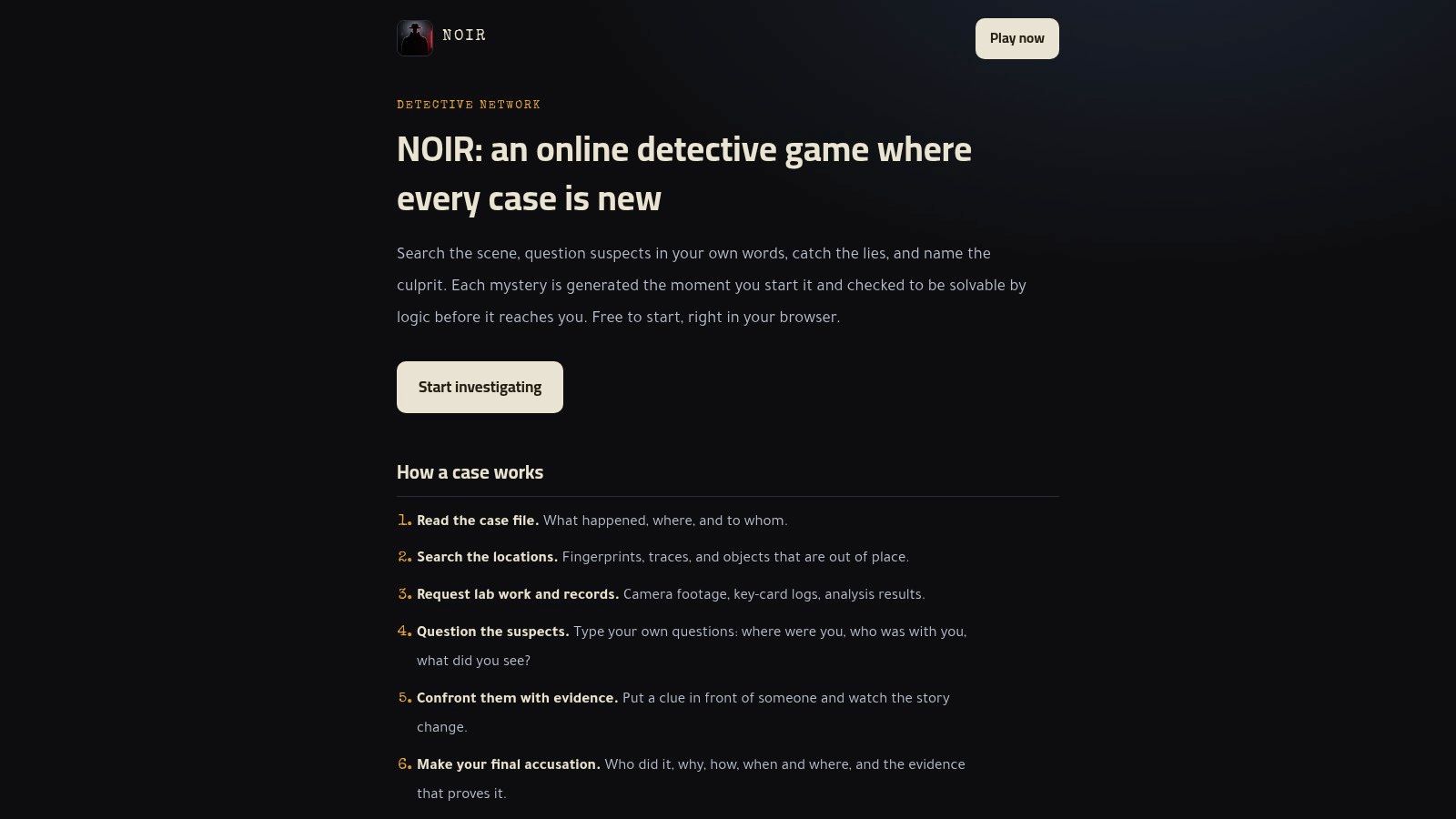
Want to ask the suspect your own question instead of selecting the next obvious dialogue option? NOIR is the pick for a more procedural investigation. You search locations, request records and lab results, and challenge interviewees with evidence.
NOIR offers quick cases described as five to fifteen minutes, alongside longer linked investigations. Its toolkit includes fingerprints, camera footage, and key-card logs, while the crimes extend beyond murder into theft, fraud, and blackmail.
More Freedom Means More Reading
The appeal is choosing an investigative direction. If someone's account depends on being elsewhere, you can pursue the relevant record rather than wait for a contradiction to appear.
That also means you need patience for text. This is a better match for someone who enjoys forming questions, reading responses, and revising a theory than someone who primarily wants to tap an illustrated scene.
- Choose it for: Interviews, documentary evidence, and a broader detective toolkit.
- Allow for: More information to organise and more decisions about what to investigate next.
- Budget consideration: Check the available case access before committing to a longer investigation; don't assume browser-based means unrestricted free play.
For a later change of pace, keep Grandma Hilde's Recipe Book on your shortlist.
NOIR fits an evening when you want to direct the investigation. Choose a quick case first, learn whether its interview-heavy approach suits you, and only then move into a linked story.
5. Half Evidence
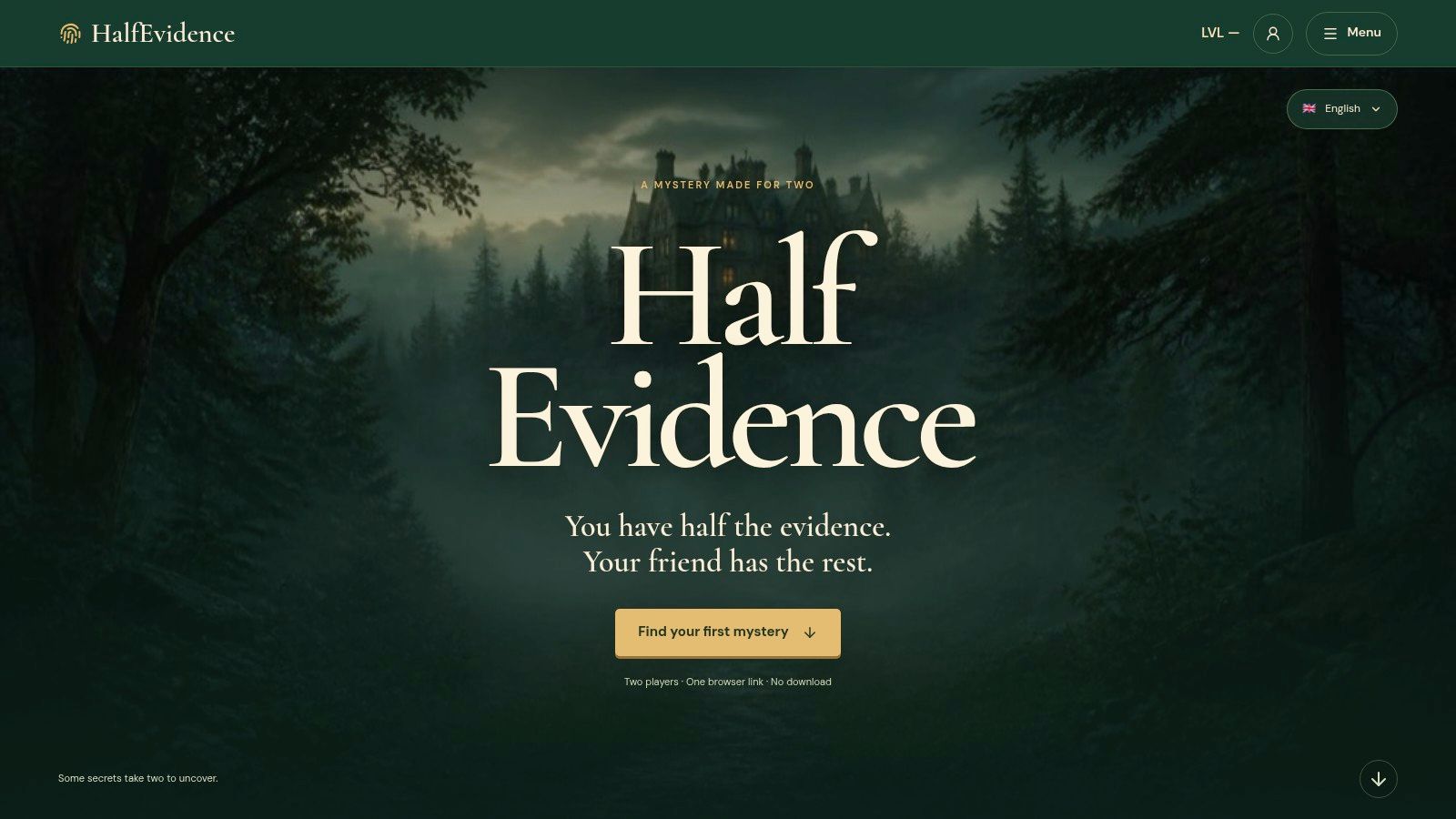
A good cooperative mystery should give both players something meaningful to contribute. Half Evidence makes that its central rule: each detective receives different evidence, so neither person can solve the case properly by staring at their own screen.
Half Evidence lists an introductory case of approximately fifteen minutes, while later cases can take forty-five to ninety minutes. Choose the introduction for a casual test run and reserve a proper shared evening for the longer investigations.
The Conversation Is the Gameplay
You'll need to describe what you can see, compare accounts, and discover which details matter to your partner. That makes it a stronger fit for a cooperative night than taking turns controlling a solo adventure.
The most useful habit is to separate observation from interpretation. Tell your partner what the evidence says before announcing what you think it proves.
Don't just report your conclusion. Share the detail that led you there so your partner can challenge it.
Multiple free browser cases are listed, and you can start without an account or download. The project is described as a beta, so approach it as an evolving experience rather than expect every interaction to feel final.
Choose Half Evidence when both players want to participate actively. Skip it if one person wants to watch passively, or if you can't reliably protect the time to finish together. Scheduling is the main cost here, even when the case itself is free.
6. Duck Detective The Secret Salami

Choose Duck Detective when you want characters as well as clues. Its down-on-his-luck duck protagonist, fully voiced cast, and comic noir presentation make it a different proposition from a spare browser puzzle. You're settling into an adventure, not clearing today's case.
Duck Detective The Secret Salami is a paid, self-contained mystery designed to take around two to three hours. That's a manageable evening commitment, but it's not the game to start while waiting for the kettle.
A Story Night Without a Huge Campaign
You inspect evidence, question suspects, and complete deduction prompts using what you've learned. The prompts give your reasoning a visible structure, making this a sensible bridge between quick browser mysteries and more demanding deduction games.
- Tone: Comic noir rather than grim crime drama.
- Interaction: Evidence inspection and interviews, supported by voiced performances.
- Cost: A paid game, so choose it when you specifically want the fuller adventure format.
- Main trade-off: The goofy premise won't suit every mystery fan, especially anyone seeking a serious procedural.
The practical benefit of the voice acting is personality, not permission to stop paying attention. Listen for what characters reveal, then check whether your deduction follows from the available information.
This is the easy recommendation for a relaxed solo evening. Pick it when you want a defined beginning and ending, room for jokes, and a cast to spend time with. Save the heavier visual reasoning for a night when wrestling with uncertainty sounds more appealing.
7. The Case of the Golden Idol
The Case of the Golden Idol is for the rainy weekend when you want to earn your answers. Its illustrated death scenes ask you to inspect details, identify people, and assemble an explanation of what happened. The pleasure comes from turning a confusing scene into a coherent account.
The Case of the Golden Idol connects twelve deaths into a larger mystery and offers a free demo on Steam. Try that before buying if you're unsure whether its demanding deduction or gruesome subject matter suits you.
Choose Concentration Over Convenience
Unlike a daily puzzle, this is something to approach with sustained attention. Individual scenes give you a local problem to solve, while connections between cases give you reasons to remember names, relationships, and earlier events.
The challenge isn't finding clickable objects. You need to distinguish what the scene establishes from what you've assumed, then revise your explanation when another detail refuses to fit.
Useful discipline: If your theory explains the victim but not the surrounding people and objects, keep investigating.
Expect more visual scrutiny than conversational role-playing. You're reconstructing events from evidence, not relying on a friendly detective partner to guide every step.
Choose Golden Idol when difficulty is part of the attraction. It's a paid commitment beyond the demo, and its deaths and unsettling imagery make it a poor choice for a cosy, low-effort break. For players who enjoy drawing their own conclusions, though, it's the strongest fit here for an absorbing longer investigation.
All 7 great mystery games at a glance
Match the game to tonight's constraint: time, reading tolerance, and whether you want cosy or demanding.
| Game | Playtime | Difficulty | Cost | Best for |
|---|---|---|---|---|
| Mystery Hunch | 5–10 minutes per case | Easy to medium | Free to play in the browser | Short, illustrated clue-solving mysteries |
| Midnight Casebook | About 10 minutes per case | Light deduction with clear culprit, method, and motive answers | Free daily cases; paid Pro tier | Quick browser whodunits with witness statements |
| Daily Detective | About 5 minutes per case | Fast but reading-heavy | Free | Fast, reading-focused deduction puzzles |
| NOIR | 5–15 minutes for quick cases; longer for linked investigations | Rises as investigations link together | Confirm current pricing on the game page | Interviews, crime-scene searches, and varied investigations |
| Half Evidence | About 15 minutes for the introduction; 45–90 minutes for later cases | Shared solving, deeper after the intro | Multiple free cases listed | Cooperative mysteries for two players |
| Duck Detective: The Secret Salami | About 2–3 hours | Gentle, story-led | Paid | A voiced, comedic detective adventure |
| The Case of the Golden Idol | Longer investigation | Challenging | Paid; free demo available | Visual deduction and a connected mystery |
If price decides it, start with the free options. If energy decides it, pick the shortest case that still sounds fun.
Pick Your Next Case and Start Detecting
Choose by the kind of attention you have tonight, not by how ambitious you think a detective game ought to be. Great mystery games can offer a satisfying contradiction, a lively interrogation, or an elaborate chain of deductions. You don't need the same thing every time.
Use this situational shortlist:
- A spare moment before dinner: Choose Daily Detective for reading and contradictions, or Mystery Hunch for a scene-focused alternative.
- A daily whodunit ritual: Choose Midnight Casebook if you enjoy explaining the culprit, method, and motive.
- An urge to interrogate: Choose NOIR when you want to ask questions and pursue records.
- A cooperative night: Choose Half Evidence when both players want responsibility for solving the case.
- A relaxed storytelling evening: Choose Duck Detective for voices, characters, and comic noir.
- A rainy weekend: Choose The Case of the Golden Idol when you want demanding visual reasoning and a connected mystery.
Be honest about reading tolerance, too. If you're tired of screens full of text, a visually driven investigation is a better bet than an interview-heavy one, even when both sound equally intriguing.
Short also doesn't automatically mean comfortable to play. Before settling in, check whether you can read the clues, distinguish important objects, and use the controls comfortably on your chosen device. A puzzle shouldn't become difficult merely because its evidence is hard to see.
Our solo developer reads every feedback message, so if you try a case, tell us where your reasoning stalled or which interaction felt unclear. Spoiler-free results are welcome, too: share the satisfaction of solving it without giving the next detective the answer.
Mystery Hunch offers free illustrated browser cases where you gather clues, compare suspects' statements, and accuse the culprit with proof. Visit Mystery Hunch, choose a case that fits your break, and send spoiler-free feedback when you're done.