7 Good Crime Games: Deduction Puzzles vs Fast Scene Hunts

You've got ten minutes, a coffee going lukewarm, and zero patience for a tutorial that eats half your break. You still want a proper mystery, though. Not a trailer for one. That's where good crime games split into two camps, and picking the wrong camp is why people bounce off games they'd otherwise love.
Some put you in a room and let your eyes do the work. You tap objects, spot what's off, and build the case from what you find. Others hand you statements, alibis, and a logic grid in your head. The fun there is catching the lie, not finding the knife. None of the seven below are shooters, so fast here means hands-on scene hunting, not reflexes. That distinction matters more than popularity, and it fits how players choose now. Bain's 2025 survey of more than 5,000 gamers found that personalization and whether friends also play can rank as highly as gameplay. Fit comes first. Start with the style that matches your break.
Table of Contents
- 1. Mystery Hunch
- 2. Daily Detective
- 3. Midnight Casebook
- 4. Enquetix
- 5. NOIR
- 6. The Detective's Desk
- 7. HalfEvidence
- How the seven crime games compare on session length, core mechanic and players
- Pick Your Detective Style and Start Tonight
1. Mystery Hunch
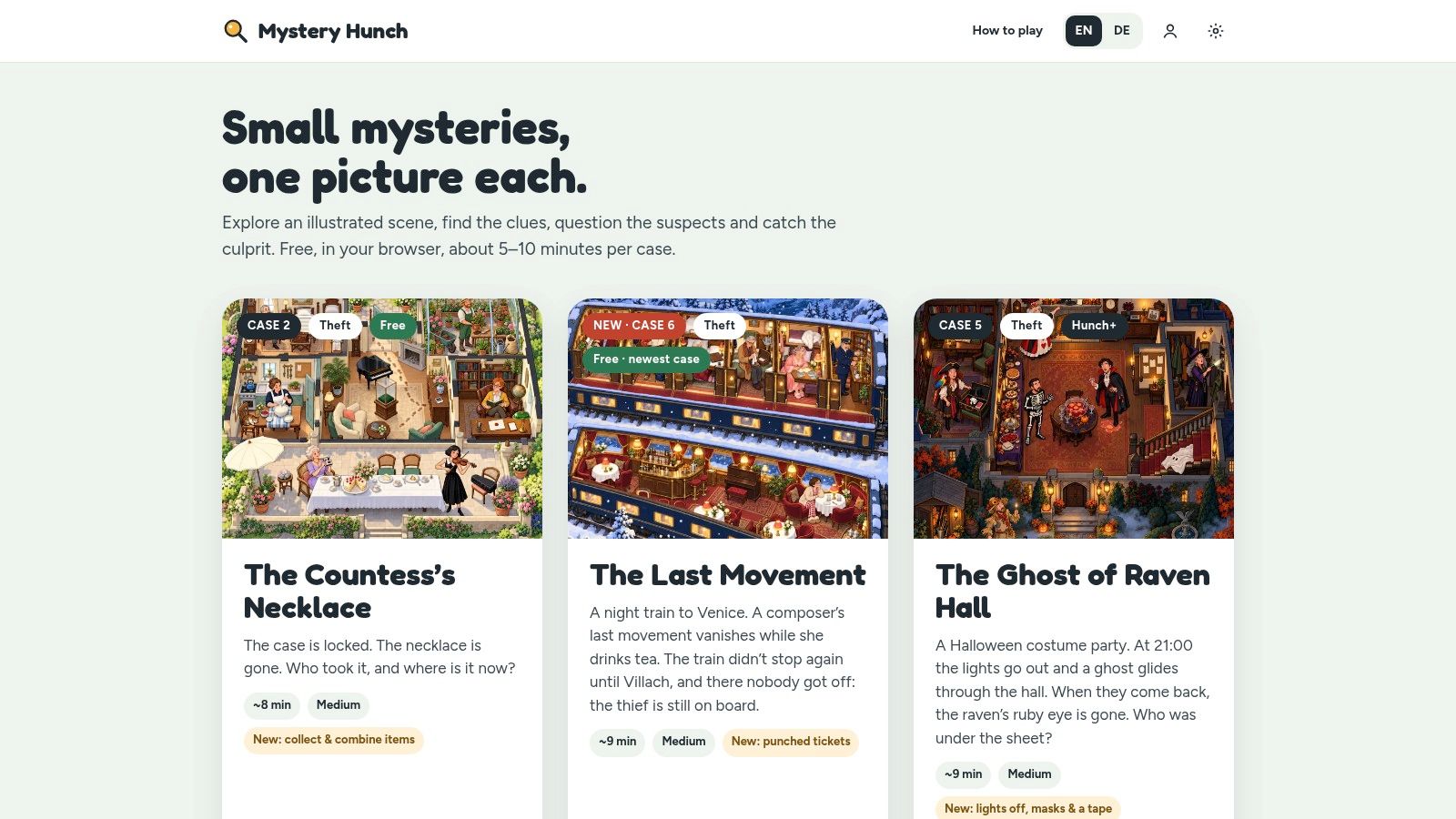
Mystery Hunch is a free browser game for players who would rather search an illustrated scene than work through a text-based logic puzzle. Tap rooms and objects to collect clues, combine them in a notebook, and check suspects' statements before accusing the culprit with proof. Each case takes about 5–10 minutes and has an easy or medium rating.
The settings include a snowed-in mountain hut, a Halloween costume party, a dinner table, an apple farm and a lakeside villa. Cases also introduce different investigative tasks, such as pencil rubbing, checking seating arrangements, and examining masks. The scene stays central, so the challenge comes from noticing details and connecting them, rather than travelling between locations.
What Works in a Short Session
- A complete case in minutes: Each mystery leads to an accusation, with up to three stars available per case.
- Evidence you can organise: The notebook lets you combine clues and compare them with suspects' statements before deciding who is guilty.
- Hints with a cost: An in-game partner can help when you're stuck. Each hint costs one star, so you trade some score for a nudge.
- Settings that shape the experience: Choose between bright or noir visual styles, and adjust language and sound settings.
Optional hints can keep a tough moment from stopping play, but the star cost makes them a real trade-off. If earning all three stars matters to you, try checking the notebook before asking for help.
The main limitation is the project's early-prototype status. Mystery Hunch is offered free of charge to collect feedback, and its cases, features and scoring may change or be removed. For a short scene-based puzzle, the current cases offer a focused alternative to games built around reading reports or comparing alibis.
2. Daily Detective
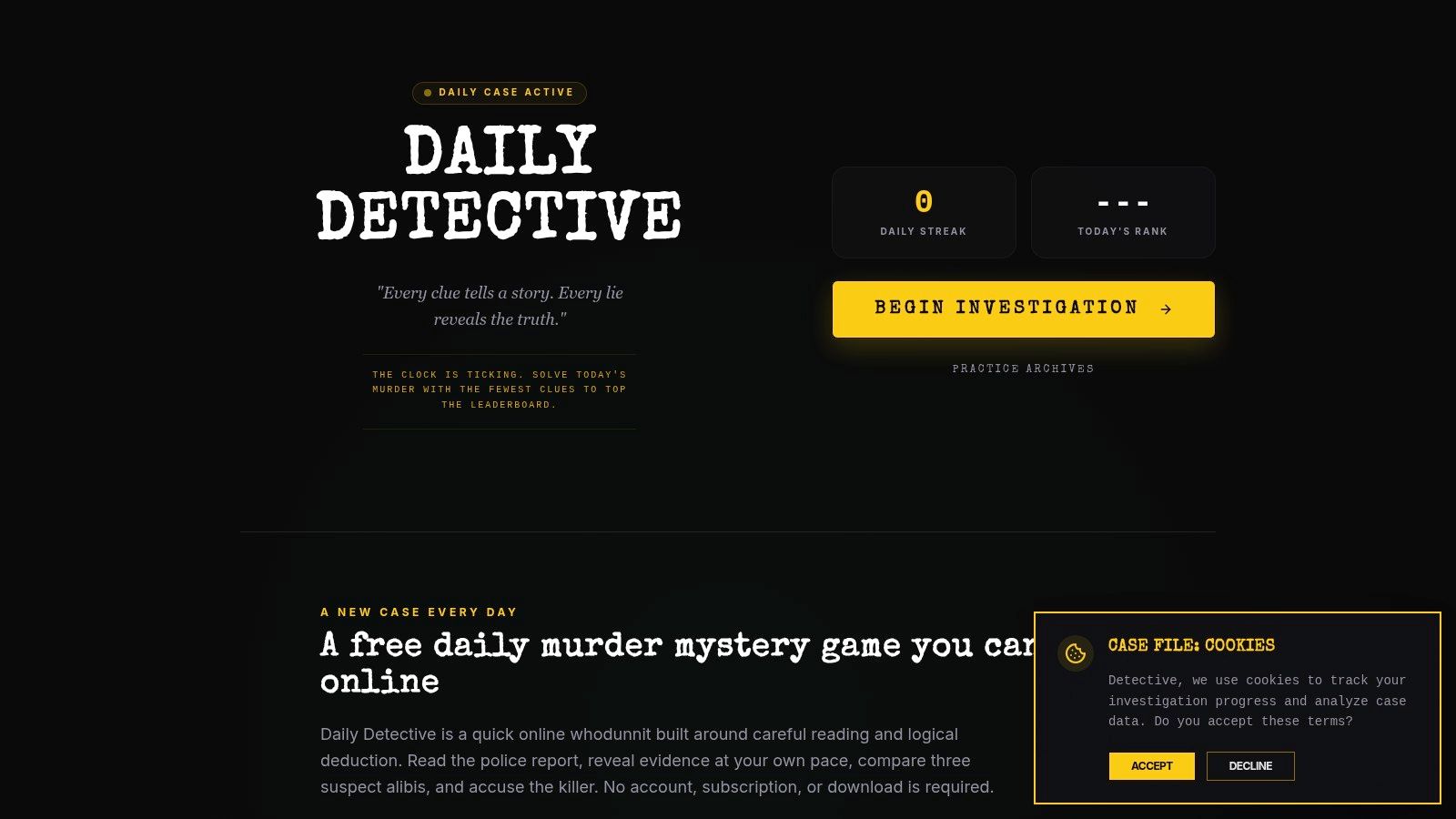
If you'd rather read than search, Daily Detective strips the whodunit down to the reasoning. You read a police report, reveal evidence, and compare it against three suspects' alibis. Most cases take about five minutes, and there's no download or account standing between you and the first clue.
The nice twist is control. You can reveal up to five clues, which means you decide how hard you want the puzzle to be. Feeling sharp? Accuse early. Feeling cautious? Spend another clue and check your thinking. When you're done, you see the full solution, so a wrong guess still teaches you where your logic slipped.
Where It Fits and Where It Doesn't
- Best for pure deduction: The case lives in the text, the alibis, and the gaps between them.
- Quick: A new murder mystery each day, plus two recent cases for practice, suits a daily five-minute habit.
- Thin back catalogue: Those two practice cases are it, so binge players will run dry fast.
- No scene to explore: If you want to poke around a room, this won't scratch that itch.
That last point is the divider in this list. If Daily Detective feels too abstract, try a scene-based case like The Hut on the Grauhorn murder case and notice which kind of thinking you enjoy more. Neither is better. They're different muscles, and you'll know within one case which one you'd rather use on your break.
3. Midnight Casebook
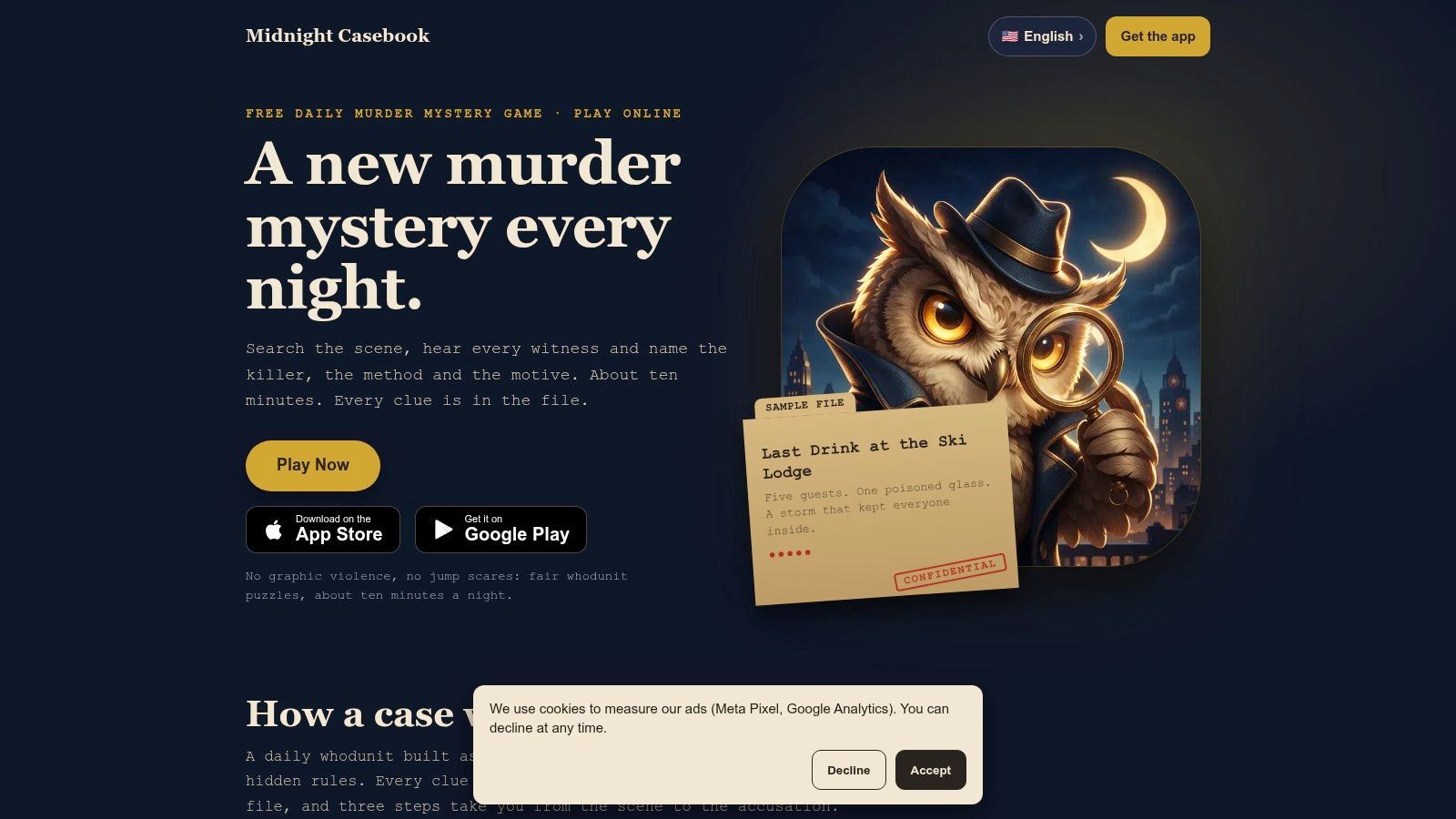
Midnight Casebook sits between the two camps, and that's its appeal. You search a darkened scene with a flashlight, pin clues to a board, and listen to voiced witness statements. Then you have to name the killer, method, and motive, not just point at a person. Cases take about ten minutes, and the site describes them as fair-play mysteries with the necessary clues included.
The flashlight is a smart constraint. It slows your eyes down and makes searching feel deliberate instead of frantic. Voiced statements help too, because tone gives you something text can't. Statements come in six languages, including English and German, and you don't need an account to start.
Worth knowing: The site says there's no graphic violence or jump scares, so the tension comes from the puzzle, not from shocks.
The limit is access. Only the current case and the first three cases are free. The archive and extras sit behind Pro, and a daily release schedule won't help if you want a big free library tonight. For a free illustrated alternative with a similar search-and-accuse rhythm, The Countess's Necklace theft case covers comparable ground in a single scene. Pick Midnight Casebook if you want the daily ritual and the voices. Skip it if a paywalled archive will annoy you more than the flashlight delights you.
4. Enquetix
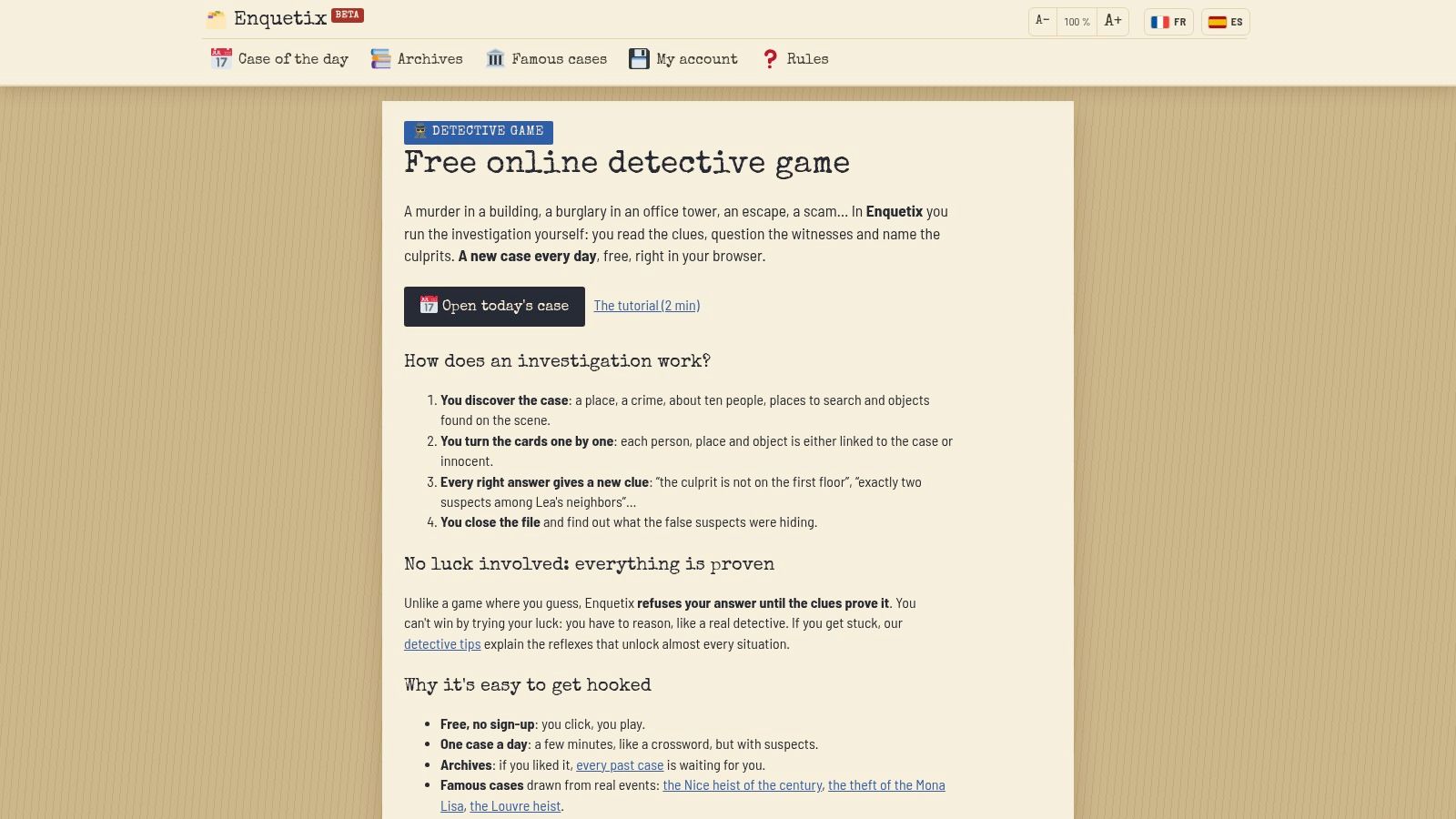
Enquetix is the logic-puzzle end of the spectrum, and it doesn't pretend otherwise. There's no room to wander. You reason through people, places, and objects, and each correct answer reveals further clues. The game won't accept a solution until the clues establish it, which kills lucky guessing and rewards actual deduction.
It also covers more ground than murder-only games. Daily investigations include burglary, escape, and scams alongside murder, and there's an archive of past cases if today's puzzle doesn't grab you. It's free with no account, though an optional account saves progress across devices. Adjustable text size and phone and computer support make it easy to play wherever you left off.
Why the Tutorial Matters Here
Structured logic needs teaching, and Enquetix includes a tutorial and detective tips rather than dropping you into a grid. That sequencing matters. A controlled multivariate study involving more than 45,000 players across three games found that tutorial effectiveness depends strongly on game complexity. A logic game earns its onboarding in a way a tap-the-room game doesn't.
Two honest warnings. The daily cases are set in France and translated into English, which some players will find charming and others slightly distant. And if your idea of a crime game involves searching a scene, this structured format will feel dry. For logic fans, though, it's one of the cleanest free options here.
5. NOIR
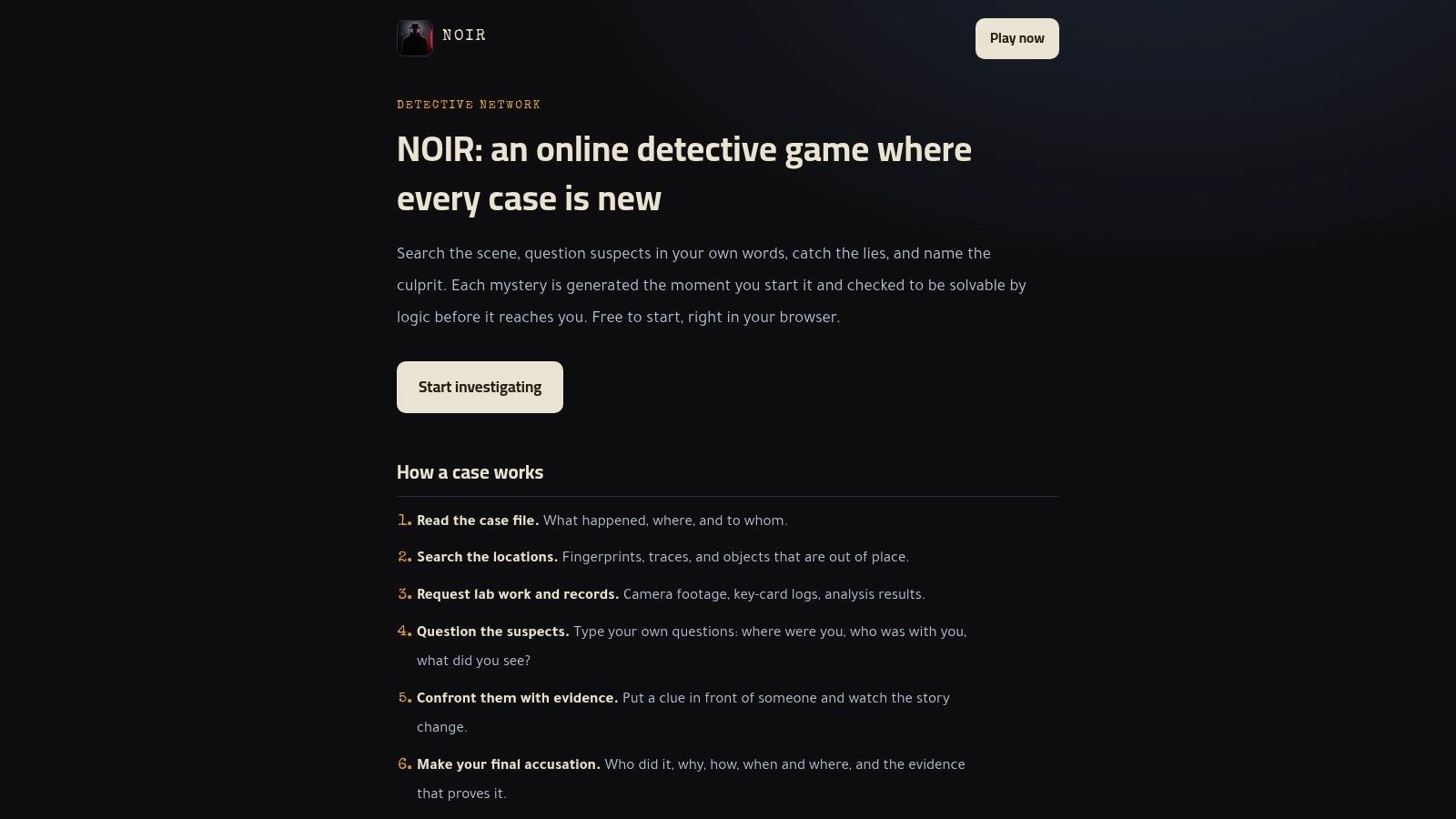
NOIR is the wildcard. It generates a case when you start playing, then lets you search locations, request records or lab work, question suspects in your own words, present evidence, and make a final accusation. Typing your own questions is a different feeling from picking from a menu. You have to decide what matters, and a sloppy question gets you a sloppy answer.
Crime fiction has always stretched across crime types, and NOIR uses that range. Cases cover theft, burglary, blackmail, fraud, kidnapping, and arson. The appetite for varied crime settings is well proven. The Grand Theft Auto series history notes the franchise had sold 345 million copies globally by May 2021, across very different settings and tones. NOIR applies that variety at browser scale, without the open world.
Pick Your Length Carefully
- Quick cases: About 5 to 15 minutes, the right entry point if you're testing the free-form questioning.
- Longer formats: These run from 20 minutes to two hours, which is a real evening, not a break.
- Cooperative play: Private cases support two to six players on phone and desktop browsers, with no installation.
The pricing is the fuzzy part. It's free to start, but the site doesn't specify what may cost extra. If you'd rather have a fixed, hand-built puzzle with a known length, Grandma Hilde's Recipe Book theft case is the opposite design choice. Choose NOIR when you want freedom and unpredictability. Choose a fixed case when you want a fair, designed solution.
6. The Detective's Desk
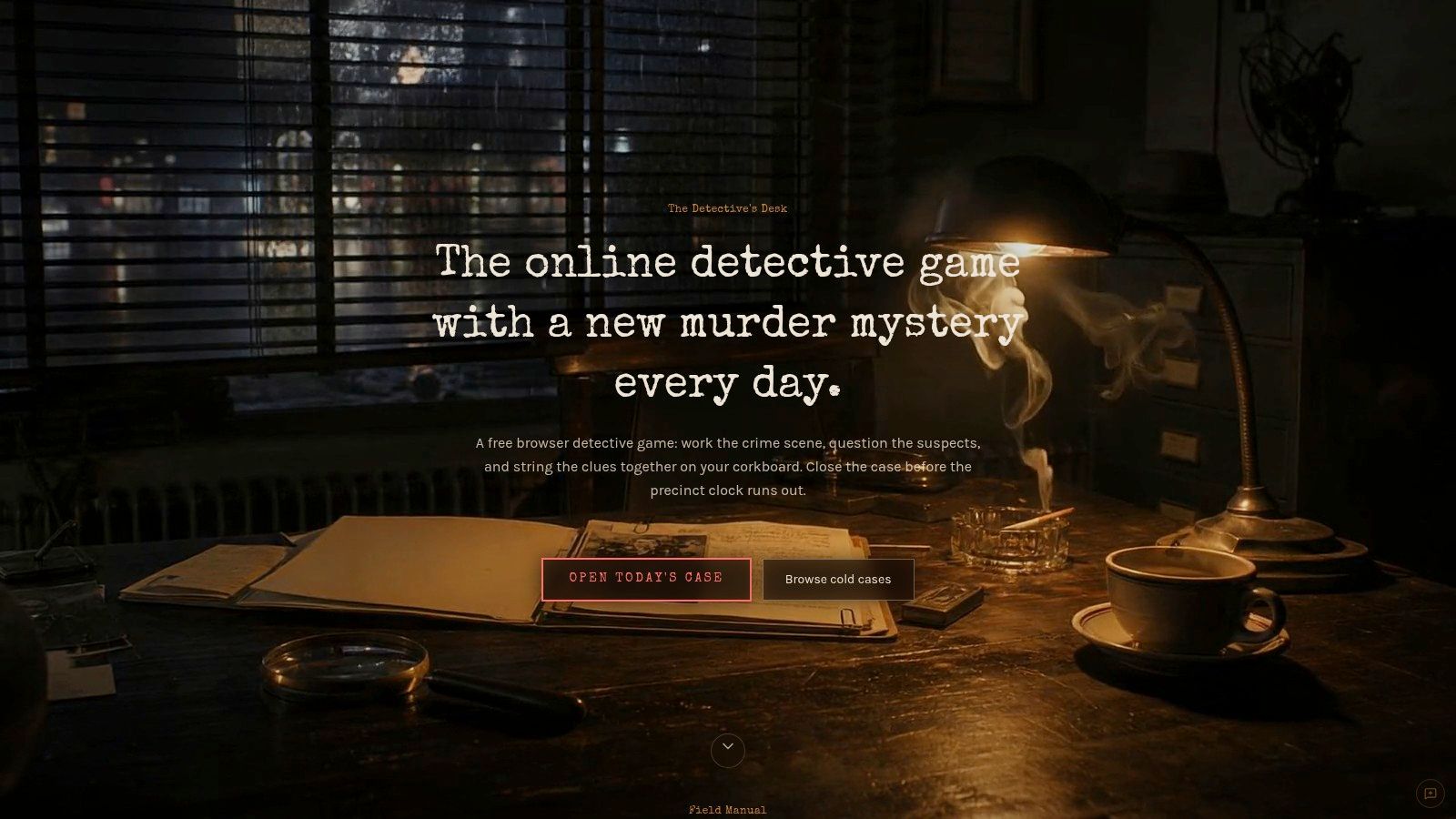
The Detective's Desk asks for more of your evening and gives you more case in return. A new murder mystery lands each day, built around a crime scene, a case file, forensic reports, and a timeline. You question suspects, weigh the evidence, and name the culprit. Most cases take 20 to 40 minutes, so this is the one you settle into rather than squeeze in.
That length buys texture the five-minute games can't afford. A timeline lets you test alibis properly instead of trusting your gut. Interrogations are optional and contribute to bonus marks, so thorough players get rewarded without blocking anyone who'd rather work from the file. When a case expires, it moves into a cold-case archive, which means missing a day doesn't mean missing the mystery.
A daily game lives or dies on whether yesterday's case still matters. An archive turns a streak mechanic into a library.
Guest play is available with no installation, and signing in saves progress and leaderboard scores if you care about comparing marks. The trade-offs are clear. The format is text-heavy, so illustrated scene hunters may find it plain, and that time estimate rules it out for short breaks. I recommend it to readers who finish the shorter games here and think, that was fun, but I wanted more to chew on. This is the fuller meal.
7. HalfEvidence
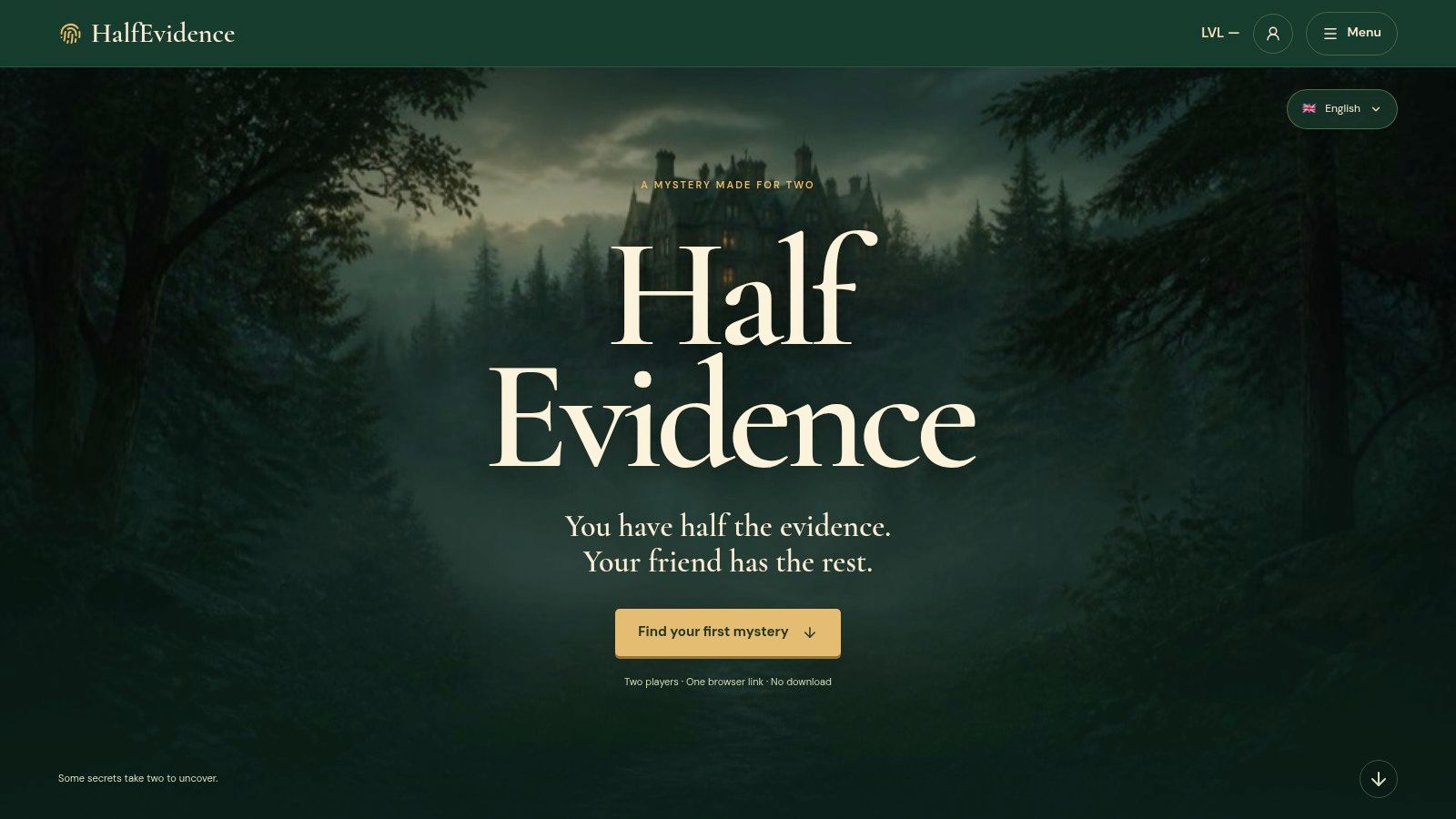
HalfEvidence changes the question entirely. It's not about how you solve, it's about who you solve with. Two players each receive different evidence and have to compare notes to crack the case. Neither of you can finish alone, so the deduction happens out loud, in the conversation. That's a different pleasure from every solo game above.
Getting started is simple. A browser invitation code lets a friend join on another device, there's no download, no account, and no timer, and cases are listed as free. The site lists seven cases. The first, Last Seen at 11:47, is rated easy at roughly 15 minutes, and later cases run longer and harder, up to hard difficulty.
The Real Requirement Is a Partner
- Discussion is the mechanic: Describing your half clearly, and listening properly to theirs, is the whole game.
- No solo fallback: Without a second player, you can't play, so keep a solo option bookmarked too.
- Longer sessions: Most cases run past a five to ten minute break, so plan it like a call with a friend, not a quick puzzle.
That partner requirement is both the point and the problem. On a night when you've got someone who likes mysteries, nothing else on this list feels like it. On a Tuesday lunch break alone, it's a non-starter. Treat it as your scheduled co-op case, and let the solo games here cover the gaps in between.
How the seven crime games compare on session length, core mechanic and players
Session length and the kind of thinking each game asks for are clearer ways to choose than a popularity ranking. Here, “fast” means hands-on clue searching, not action. The table compares that approach with logic puzzles, case files, and shared deduction.
| Item | Typical Session | Core Mechanic | Players |
|---|---|---|---|
| Mystery Hunch | About 6–9 minutes | Search an illustrated scene, combine clues, check statements, and accuse the culprit with proof | Solo |
| Daily Detective | About 5 minutes | Reveal clues and compare suspects' alibis | Solo |
| Midnight Casebook | About 10 minutes | Search illustrated scenes and assess voiced witness statements | Solo |
| Enquetix | About 5–10 minutes | Solve structured logic puzzles about people, places, and objects | Solo |
| NOIR | 5–15 minutes for quick cases; up to 2 hours for longer cases | Investigate locations, question suspects, and present evidence | Solo or 2–6 in private co-op |
| The Detective's Desk | About 20–40 minutes | Review case files, examine evidence, and question suspects | Solo |
| HalfEvidence | About 15 minutes for the first case; later cases vary | Share different clues and compare notes to solve the case | 2 players |
Pick Your Detective Style and Start Tonight
You have one coffee break and two kinds of cases to choose from: search an illustrated scene for evidence, or work through text, logic and witness statements. Popularity rankings cannot make that choice for you. The right fit depends on what you want to do.
Start with a short scene hunt if you want to inspect objects and connect clues. Choose a daily deduction puzzle if you prefer revealing clues gradually and testing alibis. A longer case file suits a free evening, while a two-player mystery gives you someone to compare evidence with. Each format asks for a different kind of attention.
If you are unsure, try one case from each style before settling on a favorite. Notice whether you enjoy scanning a scene or reasoning through statements, and which case stays on your mind afterward. That reaction is a better guide than a popularity list.
Mystery Hunch is designed for exactly that test. It is free to play in the browser, and each case takes about 5–10 minutes. Explore an illustrated scene, collect and combine clues in your notebook, check suspects' statements, then accuse the culprit with proof. The trade-off is a focused, short investigation rather than a longer case file. Choose a case for one break and see whether scene hunting suits you.